







How to build a reliable backup power system for your critical electronics.
When the power goes out, you probably don’t need to keep every appliance in your home running. What matters is keeping the right things powered.
A home battery backup system can provide reliable power for the equipment you depend on most, from your refrigerator and internet connection to medical equipment, lighting, security systems and water pumps. But choosing a battery is only the beginning.
A reliable home battery backup system brings several components together, including batteries, an inverter, charging sources and the electrical loads you want to support. Each part plays a role, and the system needs to be designed around how much power you need, how long you need it and how you plan to recharge the batteries.
So, what actually goes into a home battery backup system, and how do you determine what you need?
Let’s break it down.
What Is a Home Battery Backup System?
At its simplest, a home battery backup system stores electrical energy in a battery bank and makes that energy available to selected household loads when needed.
The main components typically include:
- Battery bank: Stores energy for later use.
- Power inverter: Converts DC power from the batteries into AC power used by household equipment.
- Battery charger: Recharges the batteries from an available AC power source.
- Transfer relay: Allows the system to switch between utility power and backup power when configured to do so.
- Charging sources: Utility power, solar or a generator can be used to recharge the batteries, depending on the system design.
- Essential loads: The appliances, equipment and circuits the system is designed to support.
The exact configuration depends on the home’s electrical requirements, the expected outage conditions and the type of emergency backup desired.
How Does a Home Battery Backup System Work?
A battery backup system brings together several sources and components to provide power where it is needed:
Utility / Solar / Generator → Charging → Battery Bank → Inverter → Essential Loads

When utility power is available, the battery can be charged and maintained for future emergencies. If solar is part of the system, solar panels can provide another source of energy for charging the battery bank. A generator can also potentially provide AC power to recharge the batteries.
When battery power is needed, the inverter converts the battery’s stored DC energy into AC power for the connected loads.
This can be especially useful during an extended outage, when maintaining essential equipment becomes part of a broader emergency preparedness plan. The important point is that these components need to be sized and configured to work together.
ESSENTIAL LOADS
Start With the Loads You Need to Power
You don’t necessarily need to power your entire home. In many cases, a more practical approach is to identify the essential loads you want to keep operating during an emergency and design the system around them.
Think about the equipment that matters most, such as:
- Refrigerators and freezers
- Lighting
- Internet and communications equipment
- Security systems
- Medical equipment
- Selected household outlets
- Sump or well pumps
Next, determine how much power each load requires. There are two numbers to pay attention to: running watts and startup or surge watts.
Running watts describe the power equipment uses while operating. Some appliances, particularly those with motors or compressors, can require significantly more power when they start. Your inverter needs enough continuous capacity to handle the loads that are running and enough surge capacity to handle these temporary increases.
You also need to consider which loads may operate at the same time.
The Samlex Inverter Run-Time Calculator can help estimate energy consumption and runtime based on your loads.
BATTERY CAPACITY
How Much Battery Capacity Do You Need?
Battery capacity determines how much energy your system can store, while inverter capacity determines how much power the system can deliver at a given time.
These are related, but they are not the same thing.
For example, a system might have enough battery capacity to operate a refrigerator and several other essential loads for many hours, but the inverter still needs to be large enough to handle their combined power requirements and any startup surges.
Battery capacity is commonly expressed in amp-hours (Ah) or watt-hours (Wh). The capacity you need depends on the power consumed by your loads, how long you want to run them and how the battery system is configured.
In other words, desired runtime is an important part of battery sizing. A system designed to keep a few essential loads running for several hours during a short outage will have different requirements from one intended to support emergency preparedness during a prolonged grid failure.
INVERTERS
Choosing the Right Power Inverter for Home Backup
The inverter is the link between the battery bank and your AC-powered household equipment.
When choosing a power inverter for home backup, consider:
- Continuous output: Can it handle the total running load?
- Surge capacity: Can it handle startup requirements?
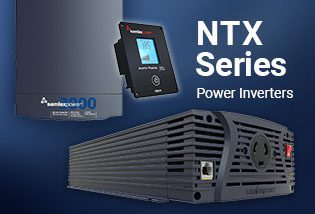
- Pure sine vs modified output: Pure sine wave output is suitable for a wide range of household electronics and sensitive equipment. Modified sine offers an affordable option for loads with non-variable speed motors.
- Voltage: Does the system require 120V or 120/240V power?
- Battery voltage: Is the inverter compatible with the selected battery bank?
- Charging capability: Can it recharge the batteries from the available AC source?
- Transfer functionality: Can it manage the transition between utility and backup power as required?
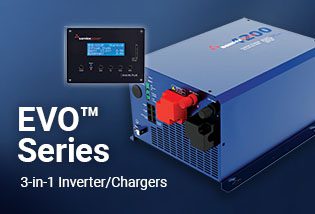
An inverter/charger combines several of these functions into one system, simplifying the overall configuration.
When Do You Need a Split-Phase Inverter?
Many household loads operate on standard 120V power. However, some residential equipment requires 240V, and some backup systems may need to provide both 120V and 240V power. Equipment such as electric ranges, clothes dryers, electric water heaters and some well pumps commonly require 240V electricity.
This is where a 120/240V split-phase inverter can be useful.
A split-phase system provides two 120V legs that can be combined to supply 240V equipment, while also supporting standard 120V loads.
Whether you need split-phase power depends on the electrical loads you want to support and how the backup system will connect to the home’s electrical system.
 Example: The EVO-4248SP
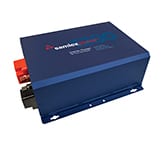
The Samlex EVO-4248SP is an example of an inverter/charger designed for applications requiring 120/240V split-phase power.
It provides 4,200W of continuous output and up to 12,600W of surge capacity, with a 48V battery bank. The system combines an inverter, battery charger and transfer relay, helping bring several functions together in one unit.
The EVO-4248SP can also incorporate solar charging through an external 48V MPPT solar charge controller and provides two AC inputs for utility and generator sources.
For a home battery backup application, the system would be sized around the selected essential loads rather than assuming the goal is to power every load in the home.
CHARGING SOURCES
Do You Need Solar for Home Battery Backup?
Solar panels are not required for a home battery backup system. A battery can be charged from the utility grid, or another AC source (wind, hydro, generator) and then used to provide backup power when needed.
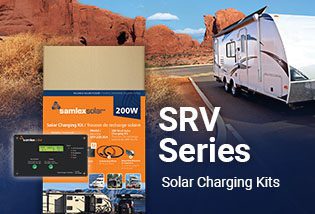
The benefits of solar panels are that they provide a silent, fuel-free way to recharge the batteries. This can be especially useful when backup power is needed for an extended period or when living off-grid. The panels will harness the free energy of the sun to keep your batteries topped up and your essentials running.
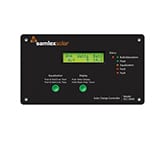
Solar panels typically connect through a solar charge controller, which manages the power going into the battery bank.
What About a Generator?
A generator and a battery backup system do not necessarily have to be competing solutions.
A generator can be incorporated as another AC input or charging source for a battery-based system. The generator can provide power to recharge the batteries, while the battery and inverter system can supply power to the connected loads.
This type of configuration can provide flexibility when solar conditions are limited due to weather conditions or time of year. It can also help support a more resilient emergency preparedness plan by providing multiple ways to restore stored battery capacity.
Planning Your Home Battery Backup System
Before selecting equipment, work through these steps:
- Identify your essential loads. Determine what you actually want to keep powered during an outage or emergency.
- Determine running and startup requirements. Account for both normal consumption and surge demands.
- Establish your desired runtime. Decide how long those loads need to operate on battery power.
- Determine battery capacity. Size the battery bank around your energy requirements and desired runtime.
- Select the appropriate inverter. Make sure its continuous output, surge capacity, voltage and other features match your loads.
- Consider charging sources. Determine whether utility power, solar, a generator or a combination makes sense for your system.
- Plan the overall system. Battery, inverter, charging equipment, transfer functions and connected loads all need to work together.
- Include the system in your emergency plan. Know which circuits or devices it supports, how it will be recharged and how long it is expected to operate.
Residential electrical systems vary, so backup systems should be properly designed and installed according to applicable electrical codes and requirements. We recommend working with a professional electrician when designing and installing a home battery backup system.
For more information about preparing for power outages and choosing the right backup power solution, read our backup power guide.
Questions about planning your home battery backup system? Contact us to speak to a Samlex power expert.
Frequently Asked Questions
What is a home battery backup system?
A home battery backup system stores electrical energy in a battery bank and uses an inverter to make that energy available as AC power for selected household loads. Depending on the system, utility power, solar or a generator can be used to recharge the batteries.
How long will a home battery backup system last?
Runtime depends on battery capacity, the amount of power being consumed, inverter efficiency and which loads are operating. Reducing the number or power consumption of connected loads can extend runtime.
What size inverter do I need for home backup?
The inverter needs enough continuous output to handle the loads running at the same time, along with enough surge capacity for equipment that requires additional power when starting. The required size depends on the specific equipment in the system. Try our inverter run-time calculator.
Can solar panels charge a battery during a power outage?
Yes, solar can be incorporated into a properly configured battery backup system as a charging source. Solar panels typically work with a solar charge controller to regulate the energy going into the battery bank.
Do I need an inverter for a home battery backup system?
If you want to operate standard household AC equipment from a battery bank, a power inverter is required to convert the battery’s DC power into AC power. An inverter/charger can also provide battery charging and transfer functionality in an integrated system.
What is a split-phase inverter and when do I need one?
A split-phase inverter provides 120/240V AC power. It can be useful when a backup system needs to support both standard 120V loads and equipment that requires 240V power.


